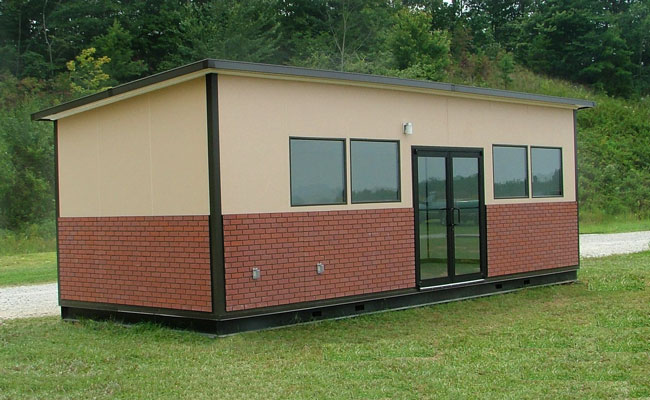
There’s a change in how businesses now think about office space. Fixed brick-and-mortar setups are no longer the only option for companies looking for functional, cost-effective work environments. Transportable buildings have become an attractive option because of the speed and flexibility they offer. Plus, the real savings companies enjoy are pushing more and more business owners to consider them.
From construction sites to regional offices, these structures are proving their worth across Australia. As commercial property costs climb and project timelines tighten, more decision-makers are asking whether a permanent build is even necessary. The answer, increasingly, is no.
Speed and Cost Advantages Over Traditional Construction
One of the strongest arguments for transportable buildings is how quickly they go from order to occupancy. A conventional commercial fit-out can take months of planning, approvals, and construction. A transportable unit, by contrast, is often manufactured off-site and delivered ready to use within weeks.
This matters for industries where downtime equals lost revenue. Businesses setting up temporary project offices, regional hubs, or on-site facilities such as site sheds can have a fully operational workspace without the long wait tied to traditional builds.
The cost difference is just as significant. Consider these factors:
- Groundworks can be avoided: Transportable units require minimal site preparation (unlike permanent structures)
- The labour costs are really low: Factory-controlled manufacturing reduces on-site trades and associated expenses.
- The pricing is predictable: Fixed quotes are standard, so they remove the budget problems seen in conventional builds.
- There’s a good reduction in waste: Off-site construction generates less material waste, so disposal costs go down.
A report by the Australian Bureau of Statistics says that non-residential building costs rose by 1%. This shows why transportable options have become even more relevant for budget-conscious businesses.
Flexibility That Matches Modern Business Needs
Commercial needs change. A company might expand into a new region for two years, then consolidate. A contractor might need additional office space for the duration of a single project. Transportable buildings suit this reality because they move when the business moves.
This flexibility shows up in several practical ways:
- Relocation is easy: There’s little to worry about when a lease ends or a project is completed, as units can be transported to a new site.
- The possibility of scalability is high: Multiple units can be joined to create larger complexes, and they can be separated if required later.
- Customisation is possible: Interiors can be changed whenever needed, so one unit can work as open-plan offices, meeting rooms, lunch areas, reception spaces, etc.
- Dual use is a major advantage: The same structure can serve as a site office one day and a sales suite on other days.
For small and medium enterprises, this adaptability is highly attractive. It simply removes the pressure of long-term property commitments. There is no need to sign a five-year lease when a transportable building can serve the same purpose with far less financial risk.
Regional and remote operations benefit the most. Setting up a permanent office in a rural area for a fixed-term contract has never made financial sense. A transportable workspace solves that problem cleanly.
Sustainability and Compliance in a Changing Market
Environmental performance is no longer optional in commercial property decisions. Transportable buildings offer genuine sustainability benefits that align with strict regulations and growing stakeholder expectations.
Factory construction is inherently more efficient than on-site building. Controlled environments mean:
- Material use is precise: Off-cuts and surplus are limited due to cut-to-measure processes.
- Lower transport emissions: Fewer deliveries are required for these buildings compared to a traditional project.
- Reusability is high: A single transportable unit can be used for various purposes; there’s no need to demolish it after one use.
- Energy-efficient design is a top feature: Many modern units include insulation, LED lighting, ventilation systems, etc., that meet National Construction Code standards.
The Australian Government’s National Waste Policy Action Plan has set a target of reducing waste sent to landfill by 80% by 2030. Transportable construction methods contribute directly to that goal through lower material waste and longer asset life cycles.
Compliance is straightforward as well. Reputable manufacturers build to Australian Standards, and units arrive certified and ready for inspection. This removes much of the red tape that slows down traditional commercial projects.
Conclusion
Transportable buildings are not a temporary fix. They represent a practical and cost-effective solution. Plus, they are an environmentally sound approach to commercial workspace needs. As property costs rise and business cycles require greater agility, these structures offer the freedom to adapt without starting from scratch.
For any business weighing up its next workspace decision, transportable options deserve serious consideration. The commercial property market is changing, and the smartest operators are already moving with it.